
Zoned Out of Accountability: Redrawing the Lines of Fairness
Payroll records without timesheets. A zoning officer having private talks with the prosecutor and judge. And single channeling to a political opponent during an election. This article discusses my experience with the zoning department and uncovers the troubling evidence I've come across while raising questions about accountability in Mansfield and why taxpayers deserve answers.
TOWNSHIP NEWSACCOUNTABILITY
Michael Bollard
9/15/20259 min read
What is Going on in Mansfield's Zoning Department?
Mansfield is a small community, but the way its zoning department operates has a big impact on residents. Homeowners, businesses, and taxpayers all expect local departments to work fairly, consistently, and with transparency. These are not partisan expectations. They are the basic standards of public service.
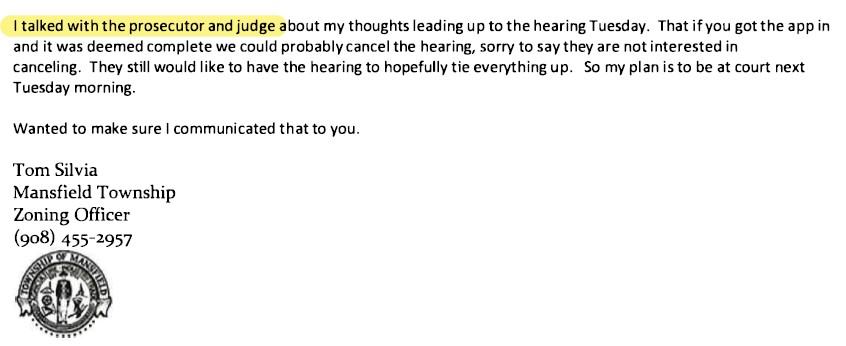
Recent records, however, raise serious questions about whether Mansfield’s zoning department is meeting those standards. Payroll logs show hours submitted while on the clock for another township. Emails reveal a zoning officer acknowledging conversations with the prosecutor and judge. Letters from me to the zoning officer were forwarded only to one member of the township committee instead of being shared broadly.
Individually, these incidents might be explained away. Taken together, they suggest a larger pattern that should concern anyone who expects accountability in local government.
This article is not about political labels. It is about whether Mansfield taxpayers are getting fair treatment, whether enforcement decisions are being made consistently, and whether public money is being handled responsibly.
This article is presented as commentary and reporting on matters of public concern. All information contained herein was obtained through lawful channels, including Open Public Records Act (OPRA) requests, publicly available government documents, and certified correspondence. The purpose of this article is to inform the public, raise questions of transparency, and encourage accountability in local government. The content of this post does not make allegations of criminal conduct and should not be interpreted as such. Instead, it reflects the author’s analysis, concerns, and opinions based on the evidence available. Under the protections of the First Amendment to the United States Constitution, citizens have the right to speak, publish, and petition their government regarding matters of public interest. Any errors or omissions are unintentional, and readers are encouraged to review the underlying documents and reach their own conclusions. All personal identifiers have been redacted.
Section 1: No SOPs, No Guardrails
Section 2: Due Process Concerns
Section 3: Letters Forwarded Selectively
Section 4: Campaign Signs and Unequal Enforcement
Section 5: Payroll Problems
Section 6: The Pattern Is Clear
The Questions Mansfield Residents Deserve to Ask
Why All This Matters?
Closing Note:
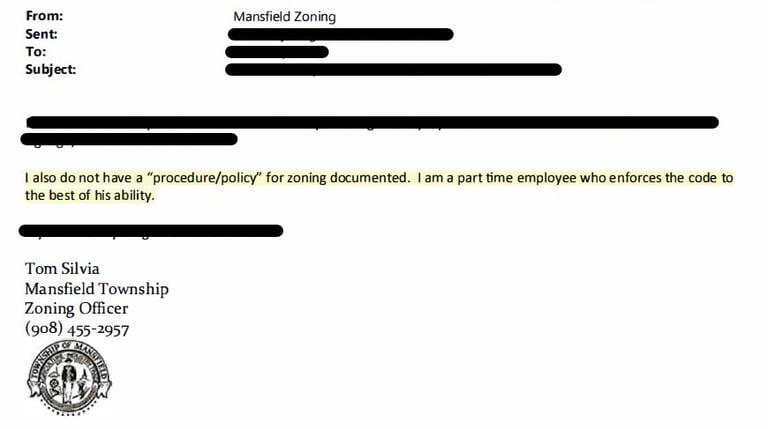
When I asked for the zoning department’s Standard Operating Procedures, I expected at least some kind of written policy manual. The response? None exists.
Records confirm there are no written SOPs to guide enforcement. That means decisions are made case by case, based not on policy but on personal judgment.
In business, SOPs are the backbone of accountability. They provide direction, consistency, and repeatability. Without them, enforcement is left to discretion, not fairness.
The lack of structure goes beyond the office and into the courtroom.
In one email, the zoning officer admitted he had spoken directly to both the prosecutor and the judge. That kind of communication creates at least the appearance of ex parte contact, which erodes confidence in fairness.
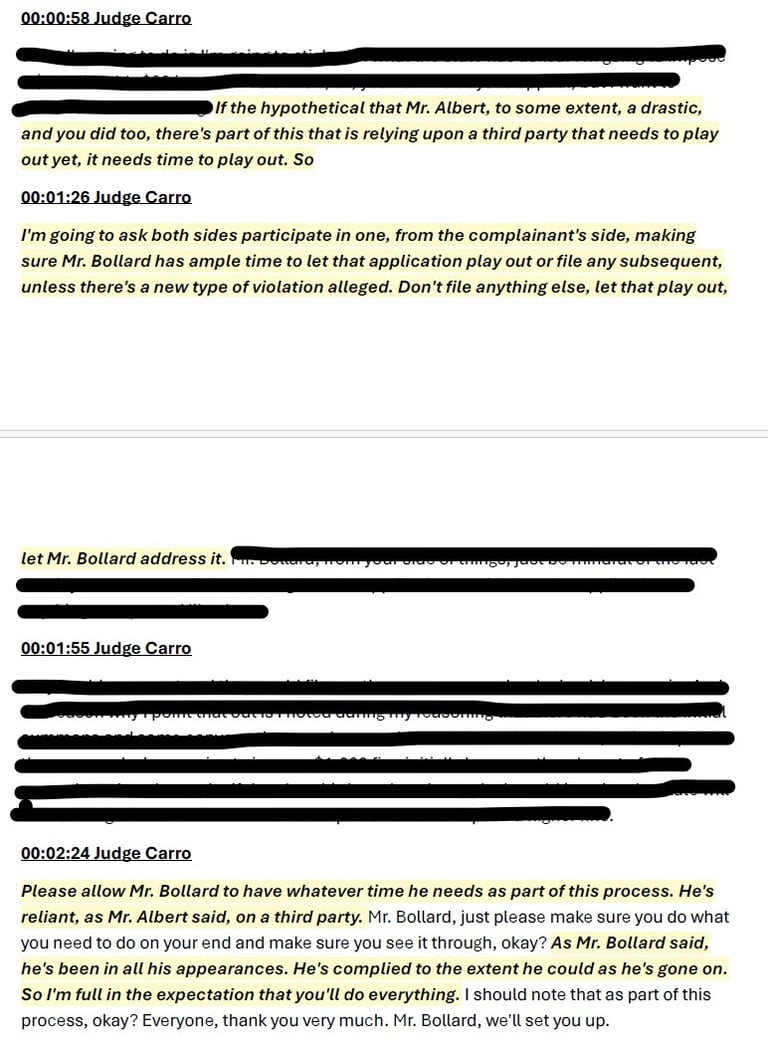
Even after the trial, the court issued a directive to the zoning officer to "let the application play out.. unless there's a new type of violation alleged. Do not file anything else, let that play out." As you can see from the court transcript from the trial below.
To understand what these letters are and why my letters matter, the context is important.
Eight days before the trial, my land-use application was submitted to the township engineer for review. The trial took place on July 29th, 2025, at 10am. The application was later denied for technical and engineering issues not originally requested on August 5th, 2025. The zoning officer emailed me a new compliance date of August 18th, 2025, knowing full well the court's directive was to "let the application play out" with the threat to write another summons on the 19th.
This new deadline was not rooted in policies, procedures, or any objective-based documentation to dictate that new compliance date. It was arbitrarily chosen to be short, so it's nearly impossible to meet, given the additional items needed to be completed by 3rd party individuals.
Because of this new deadline, I wrote an email to the zoning officer, planning board, and township clerk requesting additional time to let this application play out as per the court's directive. To which the response from the zoning officer was:
"The fact the application was filled out incorrectly does not buy you more time. As I stated I will submit a court summons on the 19th, however it will still be a couple of weeks before the hearing giving you a month since your submission on the 5th."
As August 18th grew closer, I emailed another letter in a 2nd attempt to let this application play out; however, I did not receive an answer from the zoning officer at this time.
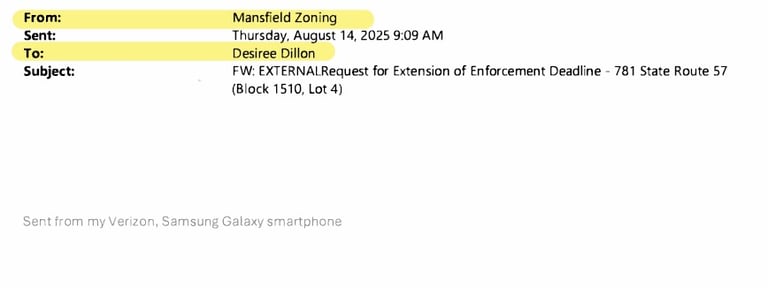
Records obtained by OPRA found that both of my letters were forwarded from the zoning officer to only one person on the township committee, my political opponent, Desiree Mora-Dillon.
Forwarding my letters to the full committee would have been transparent; however, forwarding them to one elected official was selective and gives the appearance that enforcement decisions were being influenced outside of normal channels.
My experience in working with the zoning department has raised due process concerns from the beginning. Just as when you get stopped by a police officer and issued a ticket, you have a right to ask for evidence against you from the court. I requested a discovery from the court for my violation, to which the response from the zoning officer was as follows:


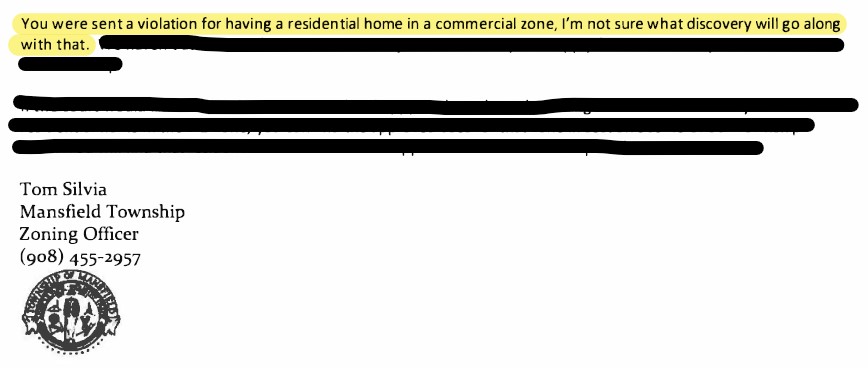
In email records procured by OPRA from a communication between the zoning officer and the prosecution, the zoning officer admits there is no evidence for the violation that was written.
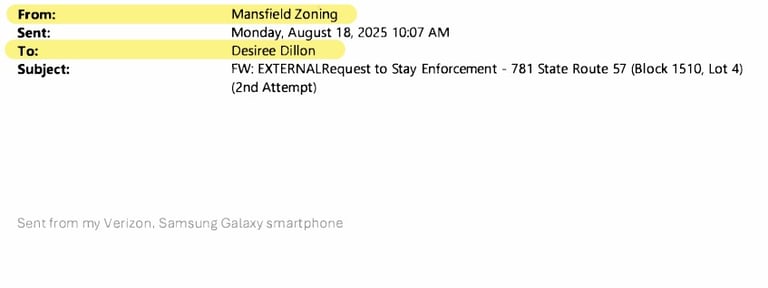
1st Letter Request
2nd Letter Request
The same selectivity shows up in the handling of campaign signs.
Email records from OPRA found that while there were no violations written, there are also no other communications between the zoning officer and residents about standing political signs, some of which are still up today, while I was instructed to remove only my campaign signs. When questioned what statute this falls under, no response was provided, and still has not been provided at the time of posting this article.
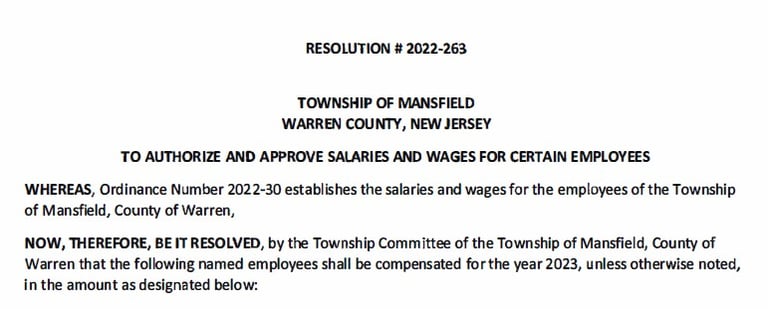
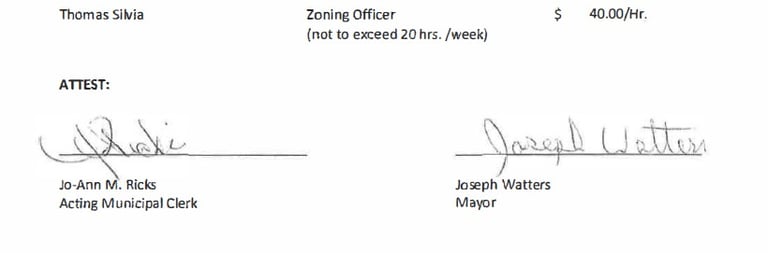
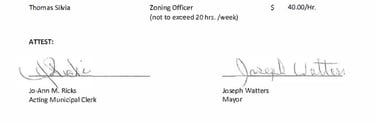
The payroll records uncovered are the clearest evidence yet that this system is broken and needs to be fixed. In Resolution# 2022-263, it was signed by Mayor Watters that the zoning officer is NOT to exceed 20 hours per week in payroll.
Throughout the year 2023, there were over 13 instances and 23 hours of pay not authorized by ordinance. At a pay rate of $40.00/hour, that amounts to an unauthorized financial gain of $920.00.
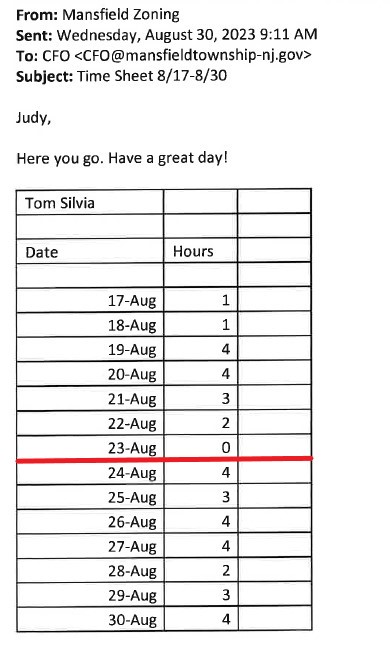
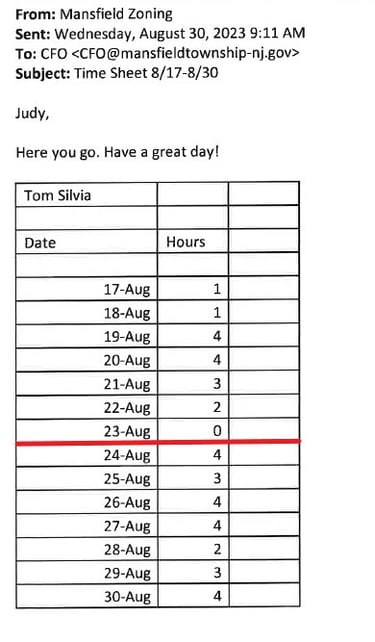
In the one pay period from 08/24-08/30, it was found that the zoning officer was 4 hours over the authorized pay allowed by ordinance. The other pay overages are listed below.
24 HOURS
15 HOURS
PAYROLL OVERAGES 2023
02/16 - 02/22: 22 Hours
04/20 - 04/26: 21 Hours
06/15 - 06/21: 22 Hours
06/29 - 07/05: 22 Hours
07/13 - 07/19: 21 Hours
07/20 - 07/26: 21 Hours
08/24 - 08/30: 24 Hours
09/07 - 09/13: 23 Hours
10/12 - 10/18: 21 Hours
10/26 - 11/01: 21 Hours
11/09 - 11/16: 22 Hours
11/30 - 12/06: 22 Hours
12/14 - 12/20: 21 Hours
23 Hours @ $40.00/Hour = $920.00
The zoning officer’s role is supposed to be administrative and neutral. He enforces ordinances, reports to the township committee, and ensures compliance with local code. He does not answer to the prosecutor other than for testimony, and he is not supposed to lobby for outcomes.
Yet records show he did exactly that.
In one exchange, he wrote:


In another, he stated:
These are not the words of a neutral officer. They are the words of someone lobbying the prosecution for a particular outcome. Instead of ensuring due process, he was advocating for fines, deadlines, and penalties based on his own opinion, not written policy or direction from the court.
When you look at each piece individually, it might be possible to explain it away. But when you connect the dots, a pattern emerges.
The problem doesn't end here.
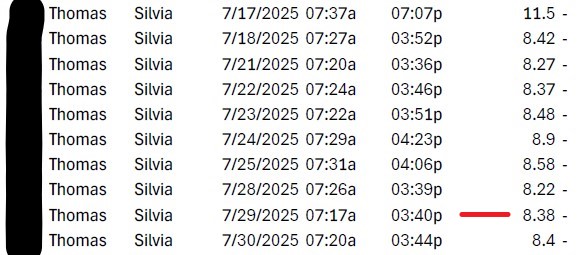
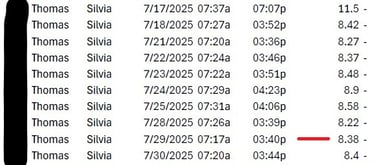
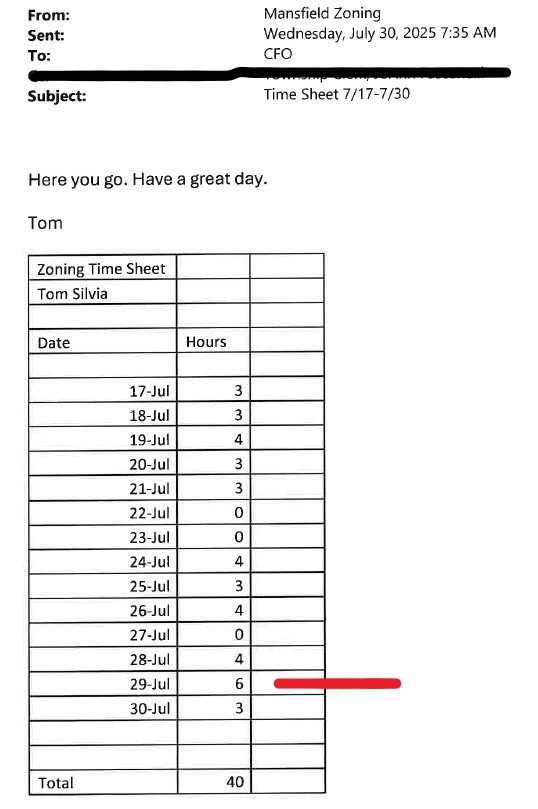
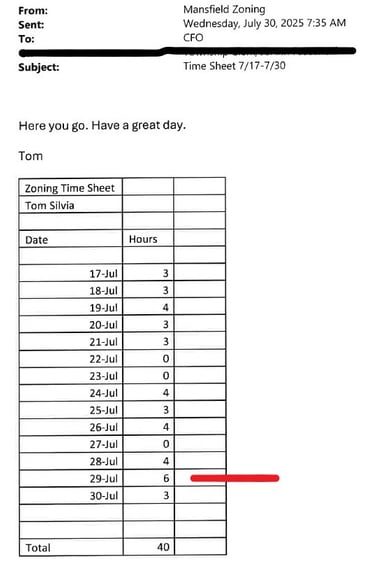
On July 29th, 2025, records show the zoning officer was clocked in at Bernardsville from 7:17am to 3:30pm, YET Mansfield payroll records show he also claimed 6 hours of work on that same day. I can attest to the zoning officer's attendance, as that was the trial date for the violation. This pattern has existed throughout 2025 since his appointment to Bernardsville in January 2025.
No SOPs -> enforcement guided by personal discretion.
Court emails -> conversations outside of open proceedings.
Lobbying the prosecution -> advocacy instead of neutrality.
Letters -> forwarded on to one incumbent, not a non-running committee member.
Campaign signs -> enforced against some, ignored for others.
Payroll records -> hours billed over the authorized amount by ordinance, clocked into two towns at once.
It is the consistency of this selectivity that is the most troubling. Rules shift depending on the situation. Correspondence flows to some but not to others. Taxpayer money is billed without consistent oversight.
Why does the zoning department operate without written SOPs?
Why did the zoning officer acknowledge conversations with both the prosecutor and judge?
Why did the zoning officer lobby for fines and deadlines instead of remaining neutral?
Why were resident letters forwarded only to one incumbent, not a non-running committee member?
Why were campaign sign rules enforced selectively?
Why did Mansfield pay for hours that overlapped with hours billed to Bernardsville?
Who, if anyone, is reviewing this conduct to protect taxpayers?
This story is not about one official’s personality. It is about a system that Mansfield residents must be able to trust.
Taxpayers deserve to know that hours billed are hours worked. That enforcement is based on policy, not on personal discretion. That correspondence is shared with all elected officials, not just a select few. And that court cases are handled on the facts, not in backroom conversations.
The judge in my case showed what fairness looks like. But one fair judge cannot make up for a zoning office run without rules, without oversight, and without accountability.
Until that changes, Mansfield will remain, quite literally, zoned out of accountability.
This campaign is about restoring accountability, transparency, and fairness to Mansfield. Every resident deserves a zoning process that operates by clear rules, respects due process, and protects taxpayer dollars.
If you believe in this mission and want to support the fight for a more accountable local government, consider contributing to our campaign. Together, we can make sure Mansfield works for everyone.
This article is based on records lawfully obtained through the Open Public Records Act (OPRA), municipal payroll documents, and certified court transcripts. All exhibits referenced have been redacted where necessary to protect personal information.
The purpose of this article is to report on matters of public concern, to present evidence in a transparent manner, and to raise questions that taxpayers and residents deserve to ask of their local government.
This article does not make allegations of criminal conduct. Whether specific actions rise to the level of legal or ethical violations is for the appropriate authorities to determine.
The conduct described herein has been formally referred to the New Jersey Local Government Ethics Board for review. This article may be updated as new information becomes available. Any future edits or corrections will be clearly noted at the bottom of this article for transparency.
Bernardsville, NJ Time Sheet

Mike Bollard for Mansfield Town Committee 2025
"Mansfield's Future. Mansfield Matters"
VOLUNTEER
volunteer@votebollard.com
© 2025. All rights reserved.
PAID FOR BY THE MANSFIELD FOR MIKE BOLLARD CAMPAIGN